
Statue Maintenance and Preservation: Protecting Sculpture for Generations
Statue maintenance and preservation protect a sculpture’s appearance, structural condition, materials, finishes, foundations, historical meaning, and long-term value. Therefore, routine inspections, appropriate cleaning, environmental monitoring, documentation, and material-specific care help statues remain safe and meaningful for generations.
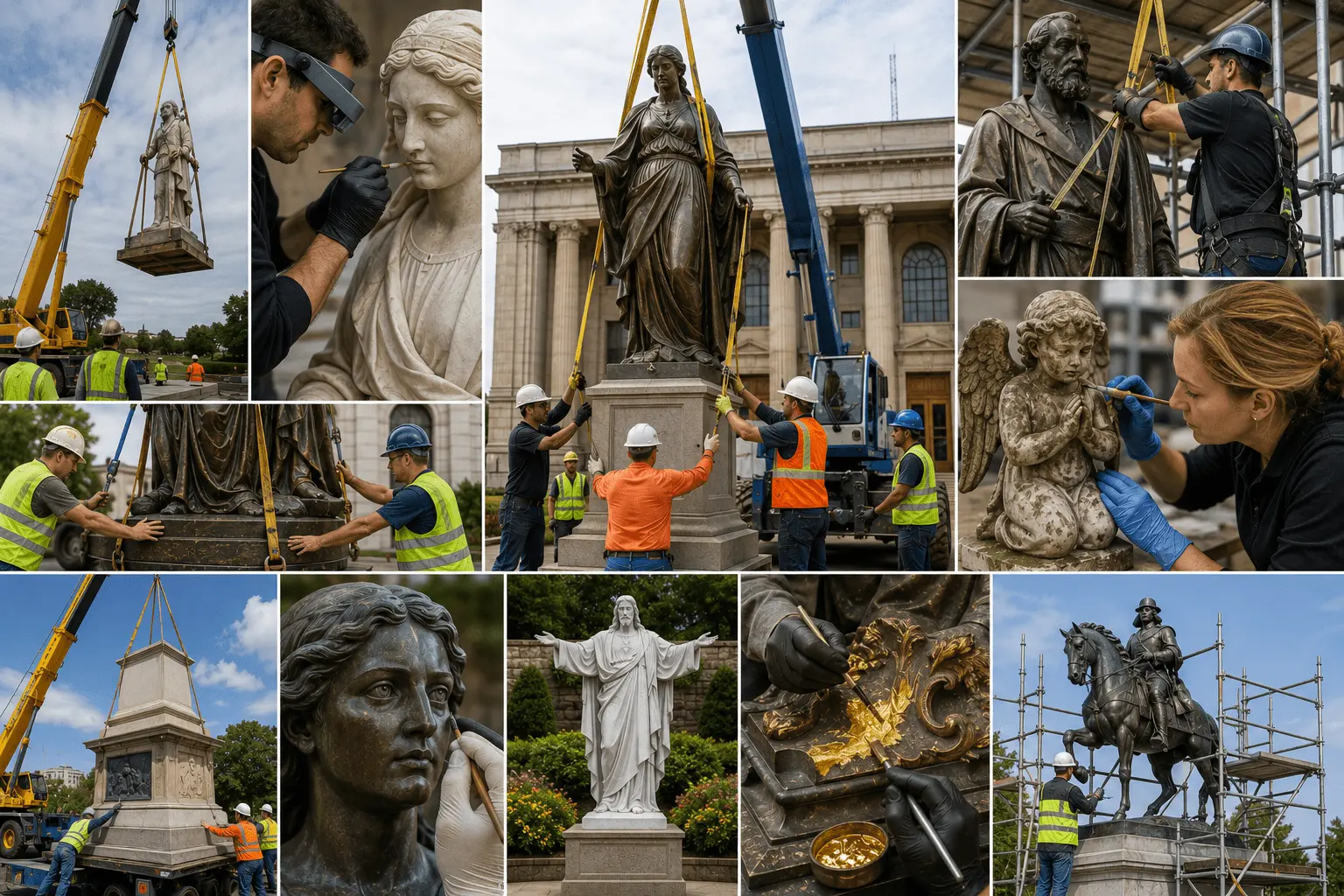
Statue Maintenance Begins After Installation
In fact, one of the most common misconceptions about sculpture is that once a statue has been installed, the project is finished. Instead, statue maintenance and preservation begin when the artwork enters its permanent environment.
From that point forward, installation marks the beginning of an entirely new chapter in the life of the artwork.
Ultimately, that chapter is stewardship.
How Statue Preservation Protects Meaning and History
In practice, whether the sculpture is a public monument, religious statue, memorial, museum reproduction, portrait bust, or architectural installation, every work of art interacts with its environment over time.
As a result, sunlight, rain, snow, wind, pollution, temperature changes, and human interaction all influence how a sculpture ages.
The sculptures that remain beautiful for generations are almost always those that receive thoughtful care. Therefore, statue maintenance and preservation protect both the physical artwork and the story it represents.
Maintenance Is an Investment in the Future
In fact, maintenance is not simply about cleaning a sculpture. Instead, it is about protecting an investment, preserving a story, and ensuring future generations experience the artwork as intended.
What Is Statue Maintenance?
In general, statue maintenance refers to the routine care performed to preserve a sculpture's appearance, stability, and condition.
- Cleaning
- Inspection
- Protective coatings
- Landscape maintenance
- Minor repairs
- Surface preservation
Therefore, the objective is not to keep the sculpture looking brand new, but to help it age gracefully while minimizing avoidable deterioration.
What Is Sculpture Preservation?
By contrast, preservation extends beyond routine maintenance and focuses on protecting the long-term integrity of the artwork. The National Park Service Museum Program provides guidance and standards for preserving, protecting, documenting, and caring for museum collections.
- Conservation planning
- Environmental monitoring
- Restoration planning
- Documentation
- Historical research
Ultimately, the goal is to ensure future generations can continue experiencing the sculpture as intended.
Why Statue Maintenance and Preservation Matter
Naturally, every sculpture changes over time. For this reason, statue maintenance and preservation should begin with a practical long-term care plan.
Therefore, the important question is not whether change will occur—but whether caretakers will manage that change thoughtfully.
- Preserve appearance
- Reduce deterioration
- Extend lifespan
- Improve safety
- Reduce restoration costs
Preventive Care for Statues and Monuments
For example, routine maintenance often requires significantly less time and expense than major restoration.
As a result, regular attention helps identify small concerns before they become costly preservation problems. As a result, preventive care forms the foundation of effective statue maintenance and preservation.
How Sculpture Materials Age Differently
In particular, different sculpture materials respond differently to their environment.
Therefore, maintenance strategies should always reflect the material being used. Therefore, statue maintenance and preservation must account for the different behavior of bronze, bonded marble, fiberglass, stone, resin, coatings, and patinas.
- Bronze
- Bonded Marble
- Fiberglass
- Natural Stone
Material-Specific Statue Maintenance
For example, a bronze monument requires different care than a bonded marble religious statue.
Similarly, a fiberglass sculpture ages differently than carved stone.
Consequently, understanding the material is the first step toward responsible long-term stewardship.
Bronze Statue Maintenance
However, although bronze is exceptionally durable, outdoor sculptures still benefit from routine care.
- Inspection
- Cleaning
- Waxing
- Patina evaluation
Understanding Bronze Patinas
Over time, patinas naturally evolve as bronze interacts with its environment.
Therefore, periodic evaluation helps distinguish natural aging from changes that may require conservation attention.
Long-Term Performance
As a result, many bronze monuments remain in outstanding condition for generations because periodic maintenance has become part of their long-term stewardship plan.
Bonded Marble Statue Maintenance
Similarly, bonded marble sculptures reproduce exceptional detail while offering long-term durability.
- Gentle cleaning
- Routine inspection
- Environmental protection
- Surface monitoring
For this reason, religious statues, portrait busts, and museum reproductions commonly benefit from simple routine care.
Fiberglass and Stone Sculpture Preservation
For example, fiberglass sculptures may experience UV exposure, surface fading, and environmental deposits over time.
Meanwhile, stone sculptures may be affected by moisture, biological growth, freeze-thaw cycles, and pollution.
Each material benefits from regular observation and preventive maintenance rather than waiting for damage to occur. In practice, statue maintenance and preservation should respond to the material, finish, environment, and condition of each individual sculpture.
Environmental Factors in Outdoor Statue Maintenance
In practice, every sculpture exists within an environment, and that environment directly affects how the artwork ages.
- Sun exposure
- Moisture
- Salt air
- Pollution
- Wind
- Temperature fluctuations
Consequently, two identical sculptures placed in different climates may age very differently over time.
Routine Statue and Monument Inspections
In fact, one of the most valuable maintenance tools is simple observation. In addition, the Canadian Conservation Institute provides conservation science, preventive-care resources, and guidance for people responsible for cultural objects and collections.
Routine inspections support statue maintenance and preservation by helping caretakers identify:
- Surface changes
- Structural concerns
- Foundation issues
- Coating deterioration
- Vandalism
- Environmental damage
Landscape Management for Statue Preservation
However, the sculpture itself is not the only element requiring care.
In addition, the surrounding environment can influence preservation.
- Tree growth
- Irrigation systems
- Drainage
- Vegetation
- Ground settlement
Proper landscape management often contributes to the long-term success of a sculpture installation. Consequently, statue maintenance and preservation should also address irrigation, drainage, vegetation, roots, and ground settlement.
Public Monument Maintenance and Preservation
In particular, public monuments frequently face the greatest preservation challenges.
- Weather exposure
- Heavy visitor traffic
- Pollution
- Vandalism
- Public interaction
Therefore, long-term maintenance planning is especially important for monuments intended to serve future generations.
Religious Statue Maintenance and Preservation
Similarly, religious sculptures often hold deep emotional and spiritual value.
- Appearance
- Symbolism
- Visitor experience
- Community pride
Memorial Statue Preservation
Likewise, memorial statues preserve deeply personal stories.
Ultimately, the goal is not only to preserve the sculpture, but also to preserve the memory associated with it.
Museum Reproduction Maintenance and Care
In addition, museum reproductions often support educational objectives.
- Historical interpretation
- Surface detail
- Educational value
- Public presentation
Statue Restoration vs Routine Maintenance
Maintenance
In general, maintenance is routine preventive care intended to preserve the sculpture before serious problems develop.
Restoration
By contrast, restoration involves corrective work intended to address damage, deterioration, vandalism, structural issues, or significant wear.
Documentation for Statue Maintenance and Preservation
Over time, documentation becomes increasingly valuable as a sculpture ages.
- Photographs
- Inspection reports
- Maintenance history
- Restoration history
- Condition notes
Good records help future caretakers understand what has been done and what may be needed later. Ultimately, documentation strengthens statue maintenance and preservation by creating a reliable history of inspections, cleaning, repairs, coatings, and restoration.
Common Statue Maintenance Mistakes
- Assuming sculptures require no maintenance
- Waiting until damage appears
- Using inappropriate cleaning methods
- Ignoring site conditions
- Failing to plan for long-term care
A Common Observation
In fact, the sculptures that survive longest are not always those made from the strongest materials.
Instead, they are often the sculptures that have caretakers.
For example, one person notices changes, another performs inspections, and a designated caretaker takes responsibility for preservation. This ongoing responsibility is the practical foundation of statue maintenance and preservation.
Maintenance Is Stewardship
Ultimately, a sculpture preserves a story.
Therefore, maintenance helps ensure that story remains visible, meaningful, and protected for future generations.
Statue Maintenance and Preservation Planning Factors
| Planning Area | Why It Matters |
|---|---|
|
Routine Inspection
|
Identifies surface, structural, foundation, and environmental concerns before they become major preservation problems. |
|
Material-Specific Care
|
Ensures bronze, bonded marble, fiberglass, stone, and other materials receive the appropriate treatment and protection. |
|
Cleaning
|
Removes environmental deposits and surface contamination without damaging finishes, coatings, patinas, or fine detail. |
|
Environmental Monitoring
|
Tracks exposure to sunlight, moisture, pollution, salt air, wind, and temperature changes that influence how the sculpture ages. |
|
Landscape Maintenance
|
Prevents irrigation, vegetation, drainage, root growth, and ground-settlement issues from affecting the sculpture or foundation. |
|
Documentation
|
Creates a reliable condition, inspection, maintenance, and restoration history for future caretakers and preservation decisions. |
|
Restoration Planning
|
Prepares the owner or institution to address deterioration, damage, vandalism, structural concerns, or significant surface wear. |
From the Statues.com Team
Overall, through decades of experience working with sculpture, our team has learned that preservation is not only technical work. Effective statue maintenance and preservation also require responsibility, documentation, observation, and consistent follow-through.
Instead, it is a responsibility. For example, a sculpture may honor a person, a faith tradition, a community, a historic event, or an artistic achievement. As a result, maintenance protects that meaning so the artwork can continue serving future generations.
Successful Preservation Provides
- Longer sculpture lifespan
- Better visual appearance
- Reduced restoration costs
- Improved safety
- Protected historical meaning
- Greater long-term value
Frequently Asked Questions About Statue Maintenance and Preservation
Why is maintenance important for a custom statue?
In general, statue maintenance and preservation help protect appearance, reduce deterioration, extend lifespan, improve safety, and preserve the artwork’s long-term value.
What is the difference between maintenance and preservation?
In short, maintenance refers to routine care such as cleaning and inspection. By contrast, preservation focuses on long-term protection, conservation planning, monitoring, and documentation.
Do bronze statues require maintenance?
Yes. For example, bronze sculptures often benefit from periodic inspection, cleaning, waxing, and patina evaluation.
How should bonded marble be maintained?
Similarly, bonded marble sculptures typically benefit from gentle cleaning, routine inspection, environmental monitoring, and protection from unnecessary wear.
Do fiberglass statues require maintenance?
Yes. In addition, fiberglass sculptures may require inspection for surface wear, fading, UV exposure, environmental deposits, and minor damage.
What environmental factors affect outdoor statues?
Consequently, sunlight, rain, snow, wind, pollution, salt air, moisture, and temperature changes can all influence how outdoor sculptures age.
Do bronze patinas change over time?
Yes. Over time, patinas naturally evolve as bronze interacts with its environment. However, some changes are normal, while others may require conservation review.
When does a statue need restoration?
For example, restoration may be needed when a sculpture experiences significant deterioration, structural concerns, surface damage, vandalism, or environmental degradation.
Why is documentation important?
Therefore, documentation preserves knowledge about condition, inspections, maintenance history, and restoration work for future caretakers.
What is the biggest maintenance mistake?
Ultimately, the most common mistake is assuming a sculpture requires no maintenance after installation.