
Mold Making and Replication in Custom Sculpture Projects
First, sculpture mold making and replication preserve original artwork, support accurate reproduction, enable restoration, and create valuable long-term production assets for custom sculpture projects.
Why Sculpture Mold Making and Replication Matter
In practice, sculpture mold making and replication begin after the design is approved and before the final sculpture is produced. Although this stage is rarely visible to the public, it is essential to many professional sculpture workflows.
Specifically, this stage is mold making.
For example, molds remain somewhat mysterious to many people commissioning a custom statue because they are rarely seen outside professional sculpture studios.
More Valuable Than Most People Realize
Meanwhile, although the finished sculpture receives the attention, the mold often becomes one of the most valuable assets created during the entire project.
As a result, it preserves the original artwork while creating opportunities for future reproduction, restoration, expansion, and long-term stewardship.
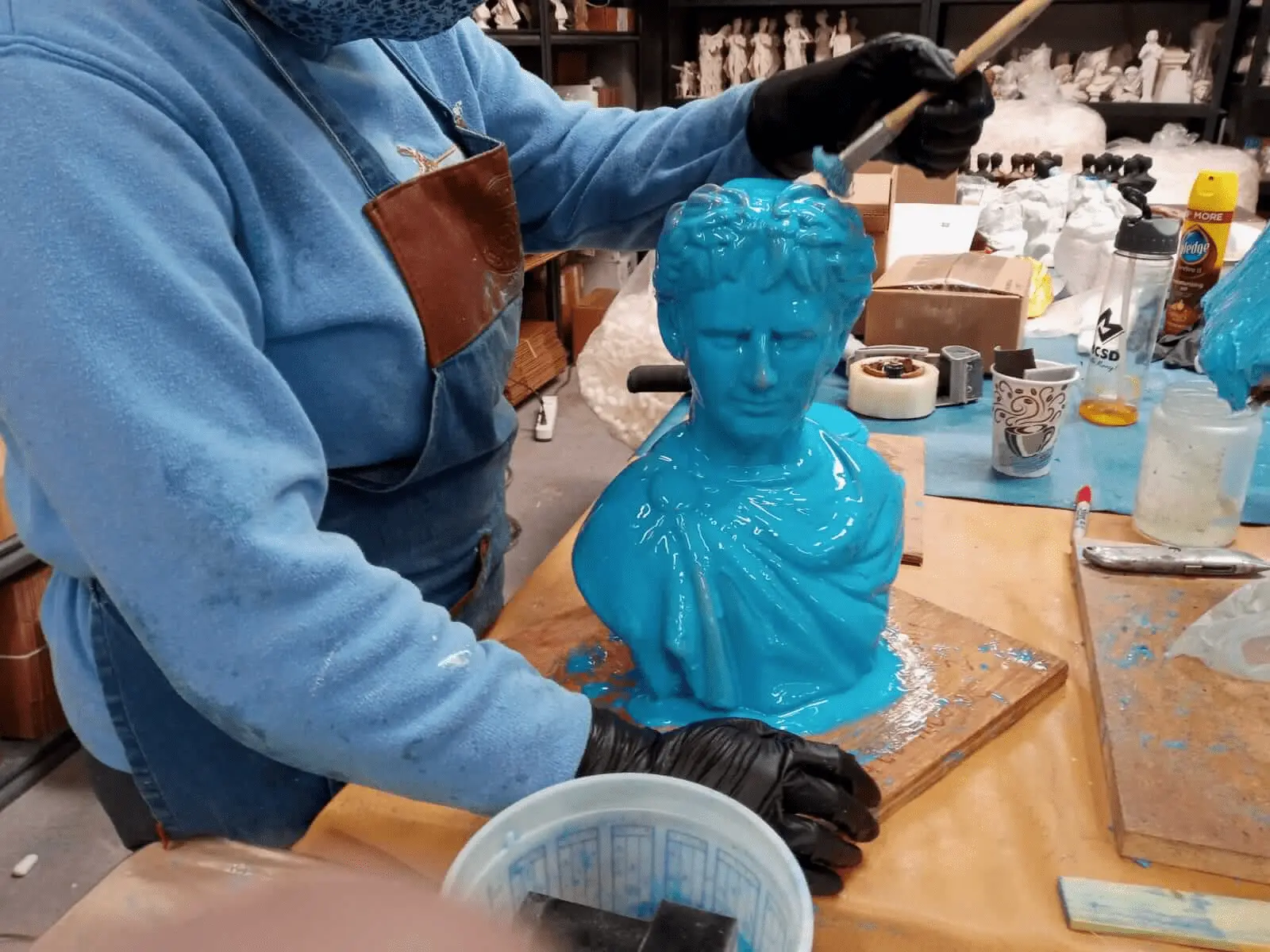
The Sculpture Tells the Story—The Mold Preserves It
Typically, most visitors never see the mold behind a sculpture.
Nevertheless, that mold often becomes the foundation for future editions, museum reproductions, restoration work, replacement components, and the long-term preservation of the artist's original vision.
What Is a Sculpture Mold?
First, a sculpture mold is a negative impression taken from an original artwork.
Therefore, its purpose is to accurately capture the sculpture's shape, proportions, surface texture, and fine detail so that positive reproductions can later be created.
- Bronze castings
- Bonded marble sculptures
- Fiberglass sculptures
- Resin sculptures
- Museum reproductions
- Architectural elements
The Bridge Between Art and Production
In many projects, the mold becomes the bridge between the artist's original sculpture and every finished piece that follows.
Consequently, rather than recreating the sculpture from the beginning each time, the mold preserves the approved design with remarkable consistency.
Why Sculpture Mold Making Matters
Many sculpture projects would be extremely difficult—or impossible—to reproduce accurately without molds. For this reason, sculpture mold making and replication protect consistency, fine detail, proportions, and artistic intent.
Specifically, molds help preserve:
- Fine detail
- Surface texture
- Proportions
- Artistic intent
- Consistency
Preserving Artistic Accuracy
In addition, a successful mold captures information that would be difficult to recreate repeatedly by hand.
For this reason, mold making remains one of the most important production stages in modern sculpture manufacturing.
Where Sculpture Mold Making Fits Into Production
Although every workflow differs slightly, mold making usually begins after several key milestones have been completed.
- Design approval
- Sculpting completion
- Maquette approval
- Final model development
Afterward, once the original sculpture is complete, the mold becomes the foundation for future production.
Protecting the Original Artwork
Likewise, creating a mold allows the original sculpture to remain protected while finished pieces are produced from the mold itself.
As a result, this greatly reduces unnecessary handling of the original work while maintaining artistic accuracy.
Types of Molds Used in Sculpture Replication
Different sculpture projects require different mold-making approaches. Therefore, sculpture mold making and replication must be planned around the artwork’s scale, complexity, material, production method, and intended number of reproductions.
For example, factors influencing mold design include:
- Scale
- Complexity
- Material
- Production method
- Number of reproductions
No Universal Mold Design
However, every sculpture presents unique challenges.
Therefore, the mold is typically designed specifically for the needs of the artwork rather than following a single standard solution.
Flexible Molds
For example, many modern molds use flexible materials capable of reproducing extremely fine surface detail.
- Portrait busts
- Religious sculpture
- Museum reproductions
- Decorative sculpture
Multi-Part Molds
By contrast, complex sculptures often require molds made from multiple sections.
- Undercuts
- Complex poses
- Multi-figure compositions
- Architectural elements
Designed for Complexity
As a result, the more intricate the sculpture becomes, the more sophisticated the mold design often needs to be in order to protect both the artwork and the finished reproductions.
What Is Sculpture Replication?
In short, sculpture replication is the process of producing additional sculptures from an existing mold while preserving the approved design and artistic intent. In professional practice, sculpture mold making and sculpture replication services work together as one coordinated production system.
Contrary to a common misconception, replication has been part of sculpture production for centuries.
Why Replication Exists
Moreover, replication supports many legitimate purposes beyond producing additional copies.
- Museum reproductions
- Religious sculpture programs
- Educational collections
- Architectural installations
- Preservation efforts
- Multiple editions
Sculpture Replication for Museum Reproductions
Historically, mold making has played a vital role in museum-quality reproductions for generations.
For example, when authorized, molds allow historically significant sculptures to be reproduced for educational institutions, museums, universities, and cultural organizations while protecting the original artwork.
- Educational collections
- Museum displays
- Traveling exhibitions
- Research institutions
- Historic preservation
Religious Sculpture Programs
Similarly, many churches, dioceses, and religious organizations commission sculptures that will later be reproduced for multiple locations.
As a result, a professionally constructed mold makes it possible to produce consistent devotional artwork while preserving the original sculptor's vision.
- Church sanctuaries
- Prayer gardens
- Shrines
- Schools
- Retreat centers
Sculpture Mold Making for Public Monument Restoration
Although most public monuments are unique commissions, sculpture mold making and replication can remain valuable long after installation, especially when restoration or replacement components are needed.
If damage occurs decades later, the original mold may simplify restoration or replacement of missing components.
- Replacement castings
- Restoration projects
- Future editions
- Historic preservation
Sculpture Mold Preservation and Storage
For this reason, many professional sculpture studios carefully preserve molds after production is complete. Proper storage extends the long-term value of sculpture mold making and replication by keeping approved forms available for future restoration and authorized reproduction.
Consequently, proper storage protects them from environmental damage and allows them to remain usable for many years.
- Controlled storage
- Documentation
- Inspection
- Maintenance
Restoration Projects
In particular, molds become especially valuable during restoration.
For example, when sculptures are damaged by weather, accidents, or vandalism, original molds may provide the most accurate reference for rebuilding missing sections.
- Broken elements
- Missing components
- Weather damage
- Historic preservation
Modern Technology
Today, the mold-making industry combines traditional craftsmanship with advanced technology.
- 3D scanning
- Digital archiving
- CNC machining
- 3D printing
- Hybrid workflows
However, these technologies complement—not replace—the experience of skilled mold makers.
For additional background on three-dimensional documentation and preservation, explore the Smithsonian 3D Digitization portal and the American Institute for Conservation’s overview of conservation. Both resources provide broader context for documenting, studying, and preserving cultural objects.
Common Misconceptions
Molds Mean Mass Production
Not necessarily. In fact, many molds are created for a single sculpture simply to support casting or production.
Replication Reduces Artistic Value
Historically, many of the world's greatest sculptors created authorized editions and reproductions using molds.
A Common Observation
At first, the value of a mold is rarely measured during the day it is created.
However, its greatest importance often becomes apparent years—or even decades—later when restoration, reproduction, or preservation becomes necessary.
Molds Preserve More Than Shape
Ultimately, a professionally created mold preserves artistic decisions, craftsmanship, historical accuracy, and creative vision.
As a result, it becomes a long-term archive that protects the sculpture for future generations.
Common Uses for Sculpture Mold Making and Replication
| Application | Purpose |
|---|---|
|
Bronze Casting
|
Create accurate wax patterns for the lost-wax casting process while preserving the original sculpture’s form, texture, proportions, and fine artistic detail. |
|
Bonded Marble
|
Produce detailed marble-composite sculptures with consistent surface quality, refined classical appearance, and faithful reproduction of the approved original. |
|
Fiberglass
|
Create lightweight, reinforced reproductions for public art, architectural features, themed environments, displays, and large sculptures requiring easier transport. |
|
Museum Reproductions
|
Support authorized educational, research, exhibition, and cultural-preservation reproductions while protecting historically significant original artwork. |
|
Religious Sculpture
|
Produce consistent devotional sculptures for churches, schools, shrines, prayer gardens, dioceses, retreat centers, and multiple sacred installations. |
|
Restoration
|
Reconstruct damaged, missing, weathered, or vandalized components using the most accurate surviving record of the artist’s original form. |
|
Architectural Sculpture
|
Replicate decorative building elements, reliefs, capitals, ornaments, façade components, and other repeated architectural details with reliable consistency. |
From the Statues.com Team
Overall, through decades of experience, our team has come to view molds as some of the most valuable assets created during a sculpture project.
Consequently, long after the original sculpture has been installed, a well-made mold continues to preserve artistic intent, protect the investment, and provide opportunities for restoration and future generations.
Professional Mold Making Provides
- Accurate reproduction
- Protection of original artwork
- Future restoration capability
- Consistent quality
- Long-term preservation
- Production efficiency
Frequently Asked Questions About Sculpture Mold Making and Replication
What is a sculpture mold?
In simple terms, a sculpture mold is a negative impression of an original artwork. As a result, sculpture mold making and replication use that impression to create accurate reproductions while preserving artistic detail.
Why are molds important?
In addition, molds preserve the original sculpture, support production, enable restoration, and allow future reproductions when appropriate.
Can a mold be used only once?
No. However, professional molds are often designed to produce multiple reproductions, depending on the project and material.
Do all sculptures require molds?
No. Instead, some sculptures are carved directly from stone or fabricated without molds, while many other production methods rely on them.
What materials use molds?
For example, bronze, bonded marble, fiberglass, resin, and many architectural materials commonly require molds.
How are museum reproductions created?
Similarly, authorized molds and modern production methods allow accurate reproductions while protecting the original artwork.
Can damaged sculptures be restored using molds?
Yes. In fact, existing molds often provide the most accurate reference for replacing damaged or missing components.
How long do molds last?
Therefore, with proper care and storage, professional molds can remain usable for many years.
Does replication reduce artistic value?
No. In fact, authorized editions and reproductions have been part of sculpture history for centuries and are widely accepted in museums and fine art.
What is the greatest benefit of preserving a mold?
Ultimately, it protects the artist's original work while providing future opportunities for restoration, replacement, and authorized reproduction.