
The Monk and the Marauder Bronze Sculpture
A slightly larger-than-life bronze ensemble at the University of Mary that brings two very different lives together around one table and turns a shared meal into a story of hospitality, captivity and redemption.
A narrative sculpture for campus life
Two strangers, one table and a larger story
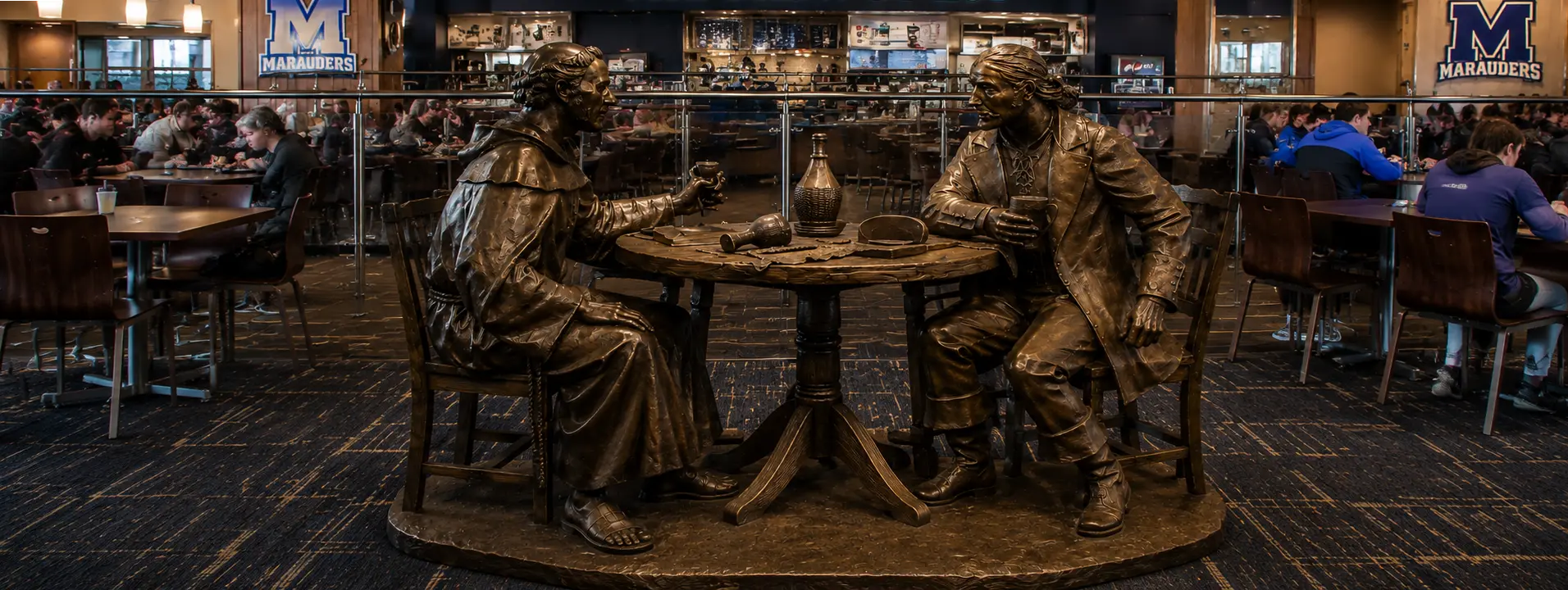
The Monk and the Marauder is a custom bronze sculpture created for the Crow's Nest Restaurant at the University of Mary. The scene places a monk and a sea-roving marauder face to face as they break bread, share wine and enter into conversation.
Commissioned by University of Mary President Monsignor James Shea, the project was initiated in 2017 and completed and installed in 2018. Rather than presenting its subjects on distant pedestals, the composition brings them into an everyday act of encounter. The rustic table, sculpted stools and carefully selected objects make the meaning legible at human scale.
The finished work occupies the center of one of the campus's most social settings. Students, faculty and visitors gather around it in the same place where they gather with one another, allowing the sculpture's themes of community and radical hospitality to remain active rather than merely commemorative.

Concept and composition
Designing an encounter not two isolated statues
The artistic challenge was to make the relationship between the figures visible before a viewer read a single word. Every pose, sightline, prop and surface had to contribute to the same narrative.
Contrasting lives
The monk embodies prayer, faith and disciplined virtue. Across the table, the marauder suggests danger, self-reliance and a life governed by a very different code.
A shared center
The round table and exchanged gestures draw attention away from opposition and toward conversation. Bread and wine create common ground between the two figures.
An inhabitable scene
Sculpted rough-hewn stools, familiar dining objects and approachable scale place the story inside the viewer's world, not behind a ceremonial barrier.
Hospitality is the action at the center of the sculpture: two people meet, share what is on the table and allow the encounter to change what comes next.
Interpretive summary of the commissioned concept
Christian symbolism in bronze
Objects that carry the meaning
The sculpture's artifacts are not decorative additions. They function as a visual vocabulary, helping visitors read the story of fellowship, bondage and release.
Bread
The shared loaf suggests community, fellowship and the needs that unite people across radically different backgrounds.
Wine and chalice
The wine vessel and cup speak to hospitality and conversation while also carrying a Eucharistic resonance within the Catholic university setting.
Ankle chain
The chain at the marauder's ankle introduces captivity into the scene and evokes the ways a person can remain bound by past choices.
Unlocked shackles
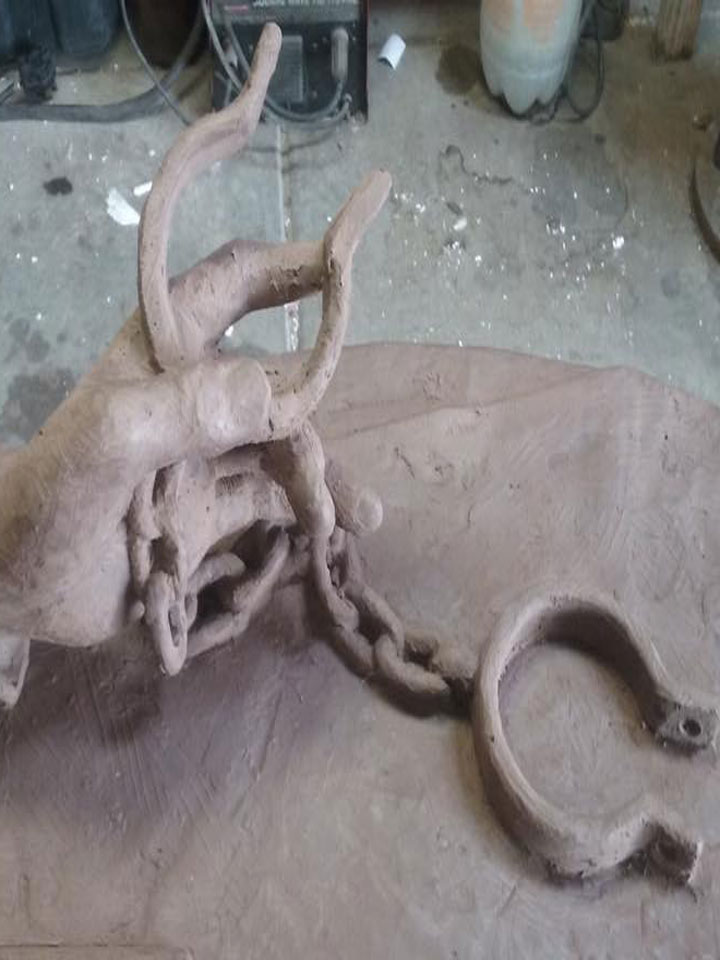
The open restraints in the monk's hand make freedom tangible. They shift the story from judgment toward redemption and a possible new direction.
Collaborative clay development
Working directly on the sculpture
The project developed through active collaboration between Monsignor Shea and the Statues.com art team, led by Vasili and Victoria Karpos.
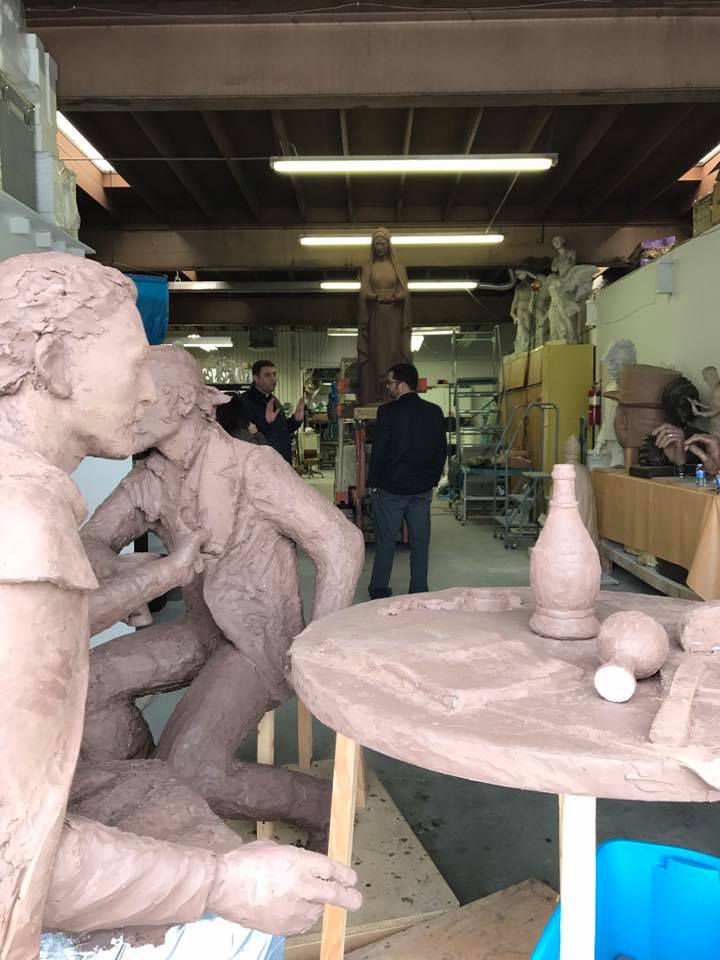
Monsignor Shea visited the studio twice during the clay phase. Those working sessions allowed the client and artists to test how the story read in three dimensions and to refine details while they were still responsive: the figures' expressions and gestures, the character of the stools, and the forms of the bread, chalices and wine vessel.
This hands-on review process helped preserve the theological intent without sacrificing visual clarity. It also ensured that the ensemble worked as one composition rather than as an assortment of separate objects.
For institutions considering a complex figurative commission, this stage illustrates the value of structured client reviews. The custom statue commissioning process is strongest when narrative, site conditions and fabrication decisions are resolved together.
Story and site brief
The university's themes, the restaurant setting and the relationship between the two characters established the design criteria.
Full-scale clay sculpture
The figures, table, stools and symbolic artifacts were developed as a unified, slightly larger-than-life composition.
Collaborative review
Studio visits enabled direct refinements to expression, gesture, period character and the visual hierarchy of the symbols.
Bronze fabrication
The approved sculpture moved through molding, casting, metal finishing, patination and final assembly.
Delivery and installation
The connected ensemble was hand-delivered to North Dakota, positioned and secured in the Crow's Nest.
Studio gallery
From clay character study to finished bronze
The production photographs show how the figures' expressions, clothing and table-level interaction were established before casting.

Engineering the installation
A unified ensemble with a narrow delivery window
The table, stools, figures and artifacts were designed to read as one connected bronze environment. That visual unity also created a logistical challenge: the team had to plan the finished footprint, weight, handling points and building clearances before delivery.
The installation was coordinated after the restaurant flooring was complete but before the main entrance doors were installed. Statues.com hand-delivered the sculpture to North Dakota, maneuvered it through the prepared opening, positioned and secured it, and completed the final cleaning and patina inspection on site.
- Connected multi-figure bronze composition
- Doorway and turning-clearance planning
- Finished-floor protection and careful handling
- On-site placement, anchoring and patina check
Cultural impact
From campus sculpture to Marauders identity
The sculpture's influence extended beyond the restaurant. It became the visual and narrative inspiration for the University of Mary's redesigned Marauders athletic logo, unveiled in August 2018.
Bismarck graphic designer and illustrator Sean Thorenson used the bronze marauder as a starting point for a transformed character. The university described the sculpture's scene of unlocked shackles, shared bread and wine as a portrayal of captivity and redemption. Thorenson carried that sense of change into a confident, forward-looking Marauder intended to communicate leadership, purpose and new vision.
This secondary life demonstrates what narrative public art can achieve. A sculpture conceived for one place can supply a durable set of symbols for an institution's wider culture provided the original concept is clear enough to be recognized, discussed and reinterpreted.
Project reference
The Monk and the Marauder at a glance
| Project | The Monk and the Marauder |
|---|---|
| Commission | Custom, slightly larger-than-life figurative bronze ensemble |
| Commissioned by | Monsignor James Shea, President of the University of Mary |
| Client and site | University of Mary, Crow's Nest Restaurant, Bismarck, North Dakota |
| Artist and fabrication | Statues.com Art Team, led by Vasili and Victoria Karpos |
| Timeline | Initiated in 2017; completed and installed in 2018 |
| Material | Cast bronze with a traditional bronze patina |
| Primary themes | Grace, radical hospitality, captivity, redemption and purposeful leadership |
| Composition | Two seated figures, shared table, sculpted stools, bread, wine vessel, chalice, chain and unlocked shackles |
Planning insight
What institutions can learn from this commission
Begin with a human action
A clear action—sharing a meal—gives viewers immediate entry into a complex story before they interpret its deeper symbolism.
Make symbolism physical
Objects such as bread, chain and open shackles translate abstract values into concrete forms that can be seen from multiple viewpoints.
Design for the real site
Scale, circulation, doorway access and installation sequence belong in the design conversation from the beginning, especially for a connected ensemble.
Continue exploring
Related sculpture resources
Explore additional project examples and practical guidance for developing a custom bronze sculpture.
Frequently asked questions
The Monk and the Marauder FAQ
It is a custom bronze narrative sculpture showing a monk and a marauder seated across from one another at a rustic table, sharing bread, wine and conversation. The scene explores hospitality, captivity and redemption.
The permanent installation is in the Crow's Nest Restaurant at the University of Mary in Bismarck, North Dakota.
The project was commissioned by Monsignor James Shea, President of the University of Mary, for the university's campus community.
The sculpture was created and fabricated by the Statues.com Art Team, led by Vasili and Victoria Karpos, in collaboration with Monsignor Shea during the clay-development phase.
The ankle chain suggests captivity, while the unlocked shackles held by the monk signify freedom and redemption. Bread expresses community and shared need; the wine and chalice evoke hospitality, conversation and Eucharistic grace.
The commission began in 2017. The bronze ensemble was completed and installed at the University of Mary in 2018.
Graphic designer Sean Thorenson used the sculpture as inspiration for the university's redesigned Marauders athletic identity. He interpreted the marauder as a transformed, purposeful leader whose encounter with the monk had changed his direction.
Sources and project documentation
- Statues.com internal project case-study brief and studio documentation supplied for this page.
- University of Mary: “Transformed Marauder Looks to Lead University of Mary into New Era of Athletics”, August 23, 2018.
- University of Mary: Office of the President.
Bring your institution's story into three dimensions
Share your idea, site, intended scale, timeline and reference materials. The Statues.com team can help shape them into a practical plan for a custom figurative sculpture or bronze ensemble.