
Women’s History · Sculpture · Community
Women’s Equality Day: Honoring Women’s History Through Sculpture
From Susan B. Anthony to Ida B. Wells, sculpture can turn history into something people encounter face to face and connect past advocates with women leading today.
Women’s Equality Day is observed on August 26, the date the 19th Amendment was certified in 1920. Sculpture gives institutions, classrooms, communities and collectors a physical way to preserve the stories of women whose work changed public life.
Women’s Equality Day Is a History Lesson Still in Progress
The 19th Amendment was ratified on August 18, 1920 and certified on August 26. It established that voting rights could not be denied on the basis of sex a landmark achievement after decades of organizing by the women’s suffrage movement.
That milestone did not immediately produce equal access to the ballot for every woman. Discriminatory state laws and other barriers continued to exclude many Black women and other women of color. Recognizing that fuller history makes Women’s Equality Day more meaningful: it can honor a constitutional breakthrough while acknowledging the people who continued the work of expanding civil and voting rights.
For Statues.com, sculpture offers one way to make those stories visible. A portrait bust can move a historical figure from a name in a book into a three-dimensional presence that invites questions: Who was she? What did she change? Why does her work still matter?
Three Dates That Frame the Story
These dates keep the article grounded in the historical record without reducing the broader history of women’s voting rights to a single moment.
From the Fierce Women Awards to the SculptHER Collection
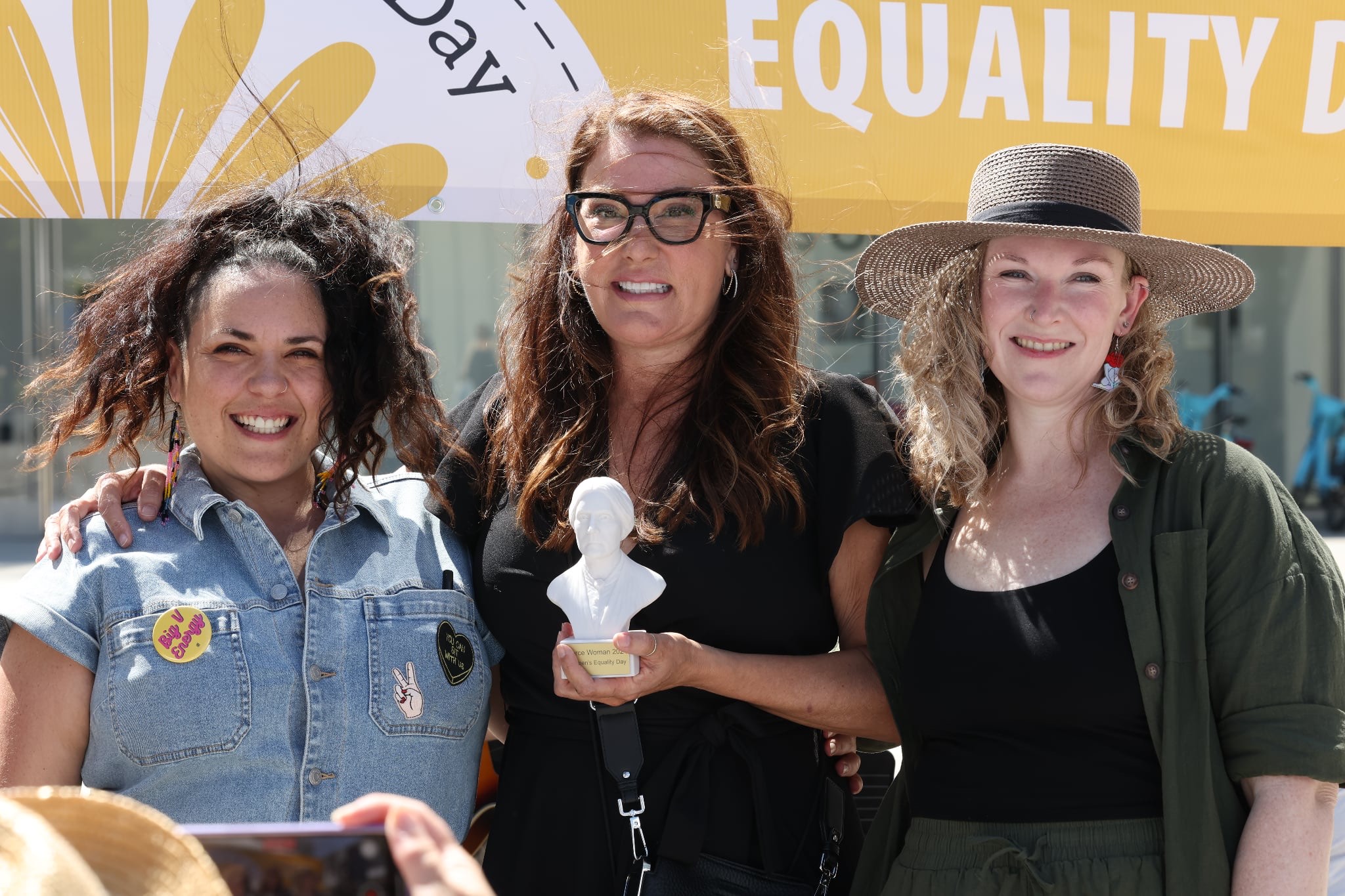
Statues.com’s involvement with the Long Beach Women’s Fair and Fierce Women Awards brings that idea into a contemporary community setting. At the August 26, 2024 celebration at the Art Theatre in Long Beach, a Susan B. Anthony bust from the SculptHER Collection became part of an event recognizing women making an impact in the community.
For the 2025 Long Beach Women’s Fair, the historical dedication centered on Ida B. Wells, the journalist, educator and civil-rights advocate. The connection between Anthony and Wells is useful precisely because their histories are not interchangeable: together they point toward a larger, more complex story of voting rights, race, journalism, reform and civic participation.
Susan B. Anthony
A prominent organizer in the women’s suffrage movement whose name remains closely associated with the long campaign for voting rights.
View the Susan B. Anthony bust →Ida B. Wells
A journalist, educator and activist whose anti-lynching work and advocacy made her a major figure in American civil-rights history.
View the Ida B. Wells bust →Women’s History in Three Dimensions
The SculptHER Collection extends beyond suffrage history to women in law, science, humanitarian work, civil rights, politics and philosophy. The value of a collection like this is not simply decorative: a labeled bust can become a compact interpretive object for a library, school, office, exhibit or home collection.
The collection includes figures such as Alice Paul, Ruth Bader Ginsburg, Eleanor Roosevelt, Clara Barton and Hypatia of Alexandria, as well as later additions including civil-rights leader Fannie Lou Hamer. Each subject should be understood on her own historical terms rather than grouped under a generic idea of “inspiration.”
Why Sculpture Works for Commemoration
A sculpture occupies space in a way a printed timeline cannot. Viewers can move around it, see a face at eye level and encounter the subject repeatedly over time. That makes portrait sculpture especially useful where remembrance and education overlap.
Context still matters. A bust without a name, date or explanation can become anonymous decoration. For schools, institutions and public-facing collections, pairing the work with concise interpretive text helps visitors connect likeness to legacy. That small step also makes the installation more useful to teachers, guides and visitors who may be encountering the subject for the first time.