
Statues.com Knowledge Center
Modern Interpretations of Abraham Lincoln in Sculpture
Lincoln is an unusually well-documented historical portrait subject. Photographs, a life mask, casts of his hands and major works of public sculpture give modern artists multiple forms of evidence but every new sculpture still requires interpretation.
Abraham Lincoln has been represented in sculpture through realistic portraits, monumental memorials and more interpretive works. Modern sculptors have an unusually rich historical record to study, including period photographs and Leonard Wells Volk's 1860 life mask and hand casts. The challenge is not simply finding a reference it is deciding how those references should become one coherent three-dimensional portrait.
A sculpture of a historical figure has two jobs that can sometimes compete: it must establish recognizable identity, and it must communicate an artistic idea appropriate to the setting. Abraham Lincoln makes a particularly useful case study because artists can compare evidence made during his lifetime with later monuments that shaped the public image of the 16th U.S. president.
Why Lincoln Is an Unusual Historical Portrait Subject
Lincoln lived during the age of photography. The Library of Congress preserves numerous photographic portraits and identifies an 1846 or 1847 daguerreotype as the earliest-known photograph of Abraham Lincoln. Later photographs document changes in his face, hair, beard, clothing and physical presence across different periods of his public life.
That matters to sculpture. A commissioner can specify which stage of Lincoln's life the work should represent instead of treating every surviving image as interchangeable.
Leonard Volk's 1860 Life Mask and Hand Casts
The current version of this Statues.com article incorrectly suggests that Lincoln sculpture began after his assassination. Important sculptural reference predates 1865. According to the Smithsonian, Chicago sculptor Leonard Wells Volk produced a plaster life mask of Lincoln in April 1860 and casts of his hands in May 1860. The National Portrait Gallery also records a Lincoln life bust by Volk dated 1860.
Photographs describe appearance through a two-dimensional image. A life mask preserves direct three-dimensional facial information, while hand casts preserve physical form at actual scale. Together with photographs, these sources give a portrait sculptor different kinds of evidence to compare.
Daniel Chester French and the Lincoln Memorial
One later interpretation became inseparable from Lincoln's public image: the seated figure inside the Lincoln Memorial in Washington, D.C. The National Park Service identifies Daniel Chester French as the sculptor and explains that the Piccirilli brothers executed the marble carving under his supervision. The figure is approximately 19 feet tall and consists of 28 pieces of Georgia marble assembled with nearly invisible seams.
French did not approach Lincoln casually. The National Park Service account of the statue notes that he spent years researching Lincoln and studying photographs. The resulting sculpture demonstrates an important principle: documentary evidence can support likeness, while scale, seated pose, architectural setting and expression shape interpretation.
Four Approaches to Interpreting Lincoln Today
Historical Realism
Prioritizes recognizable likeness, period-appropriate clothing and documented physical characteristics. Multiple references help prevent one photograph from becoming the entire portrait.
Monumental Interpretation
Uses scale, pose, placement and surrounding architecture or landscape to communicate public significance as well as individual identity.
Expressive Portraiture
Maintains recognizable identity while using gesture, modeling, surface or expression to emphasize a particular psychological or narrative quality.
Contemporary Interpretation
May simplify, stylize or abstract the figure. The artist must decide which visual or contextual cues are necessary for the subject to remain legible as Lincoln.
What Should a Lincoln Sculptor Research?
- Period photographs from reliable archives
- Leonard Volk's 1860 life mask
- Volk's casts of Lincoln's hands
- Period clothing and accessories
- Documented physical descriptions
- Existing portraits and sculptures
- The age and historical moment depicted
- The purpose and audience of the new work
- Site, scale and viewing distance
- Any inscription or interpretive context
For researchers beginning with photographs, the Library of Congress Abraham Lincoln collection provides a useful primary-source starting point. A responsible portrait process should distinguish documented evidence from later artistic interpretation.
Historical Accuracy Is Not the Same as Copying One Photograph
A portrait photograph records one camera position, one expression and one instant. Sculpture must resolve the head and body in the round. When several references survive, a sculptor must compare facial structure across viewpoints and dates, understand which features remain consistent, and decide which expression and posture communicate the intended historical moment.
A historically grounded sculpture can still make interpretive decisions about expression, gesture, scale and surface. Review matters because those decisions determine whether the finished work communicates the identity and legacy the project intends to represent.
Historical facts in this article are grounded in primary institutional collections from the Smithsonian Institution, National Portrait Gallery, Library of Congress and National Park Service. Statues.com project guidance is separated from those historical-source claims.
Commissioning a Sculpture of a Historical Figure
A new Lincoln sculpture or a portrait of any historical figure should begin with a clearly defined subject and purpose. Identify the period of life to be depicted, collect the strongest available reference material, establish the intended site and viewing distance, and decide whether the goal is strict portrait realism or a more interpretive memorial.
The material, scale, engineering, approvals and installation requirements then depend on the project. For a broader production overview, use the Statues.com Commissioning a Custom Statue Guide. Civic and institutional projects should also review the Public Monument Planning Guide.
Abraham Lincoln Busts Available from Statues.com
Prefer a finished collectible rather than a custom commission? The Statues.com Abraham Lincoln Bust is available in multiple finish options. Select either image below to view the live product page and current purchasing options.
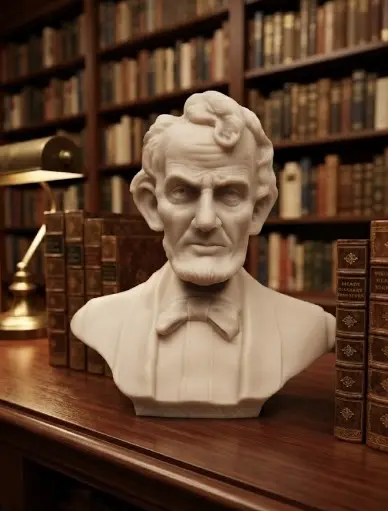
Abraham Lincoln Bust — White
See the white bonded marble presentation of the Statues.com Abraham Lincoln portrait bust and check the live product page for current availability and options.
View Lincoln Bust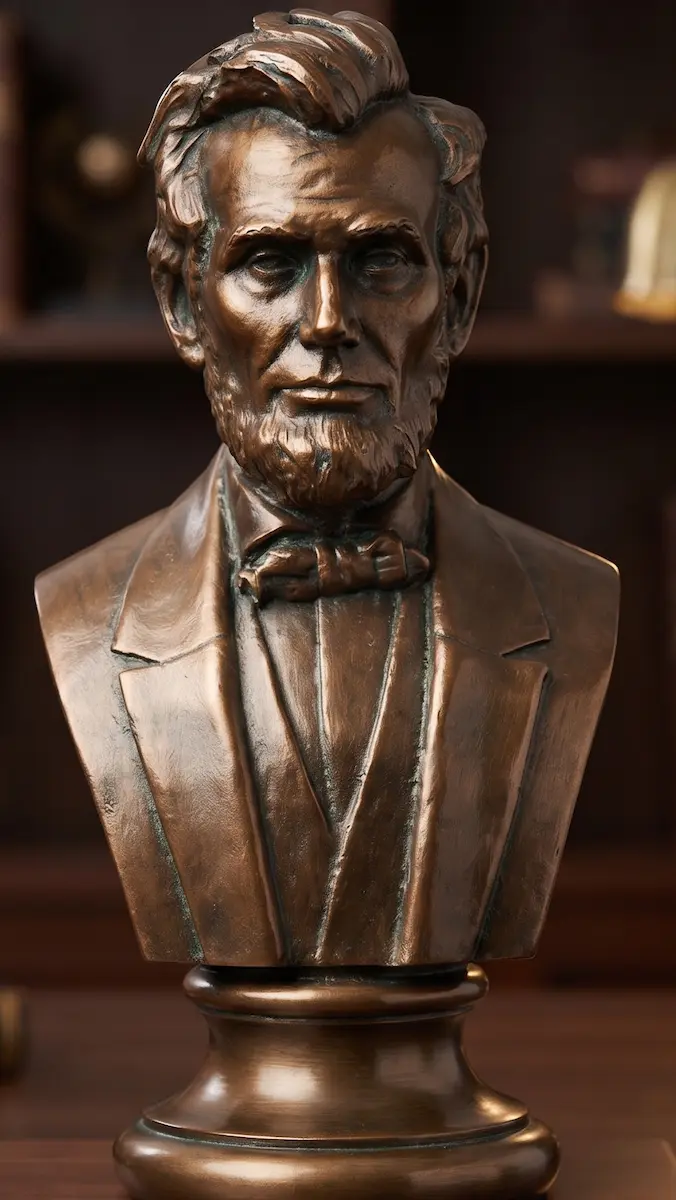
Abraham Lincoln Bust — Bronze Tone
See the hand-applied bronze tone option of the same Abraham Lincoln bust, with current finish selection and purchasing information on the product page.
View Bronze Tone OptionLooking for a smaller piece? View the Abraham Lincoln Mini-Bust →
Abraham Lincoln Sculpture: Frequently Asked Questions
Who created the statue inside the Lincoln Memorial?
Daniel Chester French designed the seated Abraham Lincoln sculpture. Under French's supervision, the Piccirilli brothers carved the work from 28 pieces of Georgia marble. The National Park Service documents the sculpture and its production.
Did Abraham Lincoln sit for a sculptor?
Yes. Sculptor Leonard Wells Volk worked directly from Lincoln in 1860. The Smithsonian records Volk's April 1860 plaster life mask and casts of Lincoln's hands made in May of that year.
How tall is the Lincoln Memorial statue?
The seated Lincoln figure is approximately 19 feet tall, according to the National Park Service. Its monumental scale is part of how the sculpture operates within the architecture of the memorial.
What references can be used to sculpt Abraham Lincoln today?
Useful evidence includes historical photographs, Volk's life mask and hand casts, documented physical descriptions, period clothing references and established portraits. The intended age, historical moment, site and purpose should also guide the interpretation.
Planning a Sculpture of a Historical Figure?
Begin with the subject, the strongest available historical references, the intended location and the purpose of the monument. Share those materials with Statues.com to start evaluating the portrait, scale, material and project requirements.
Start Your Sculpture Project