
Custom Statue Commissions: From Vision to Reality
A successful commissioned sculpture is not created in one leap. It develops through clear goals, strong reference material, scale and material decisions, sculptural interpretation, documented approvals, fabrication, finishing and site planning.
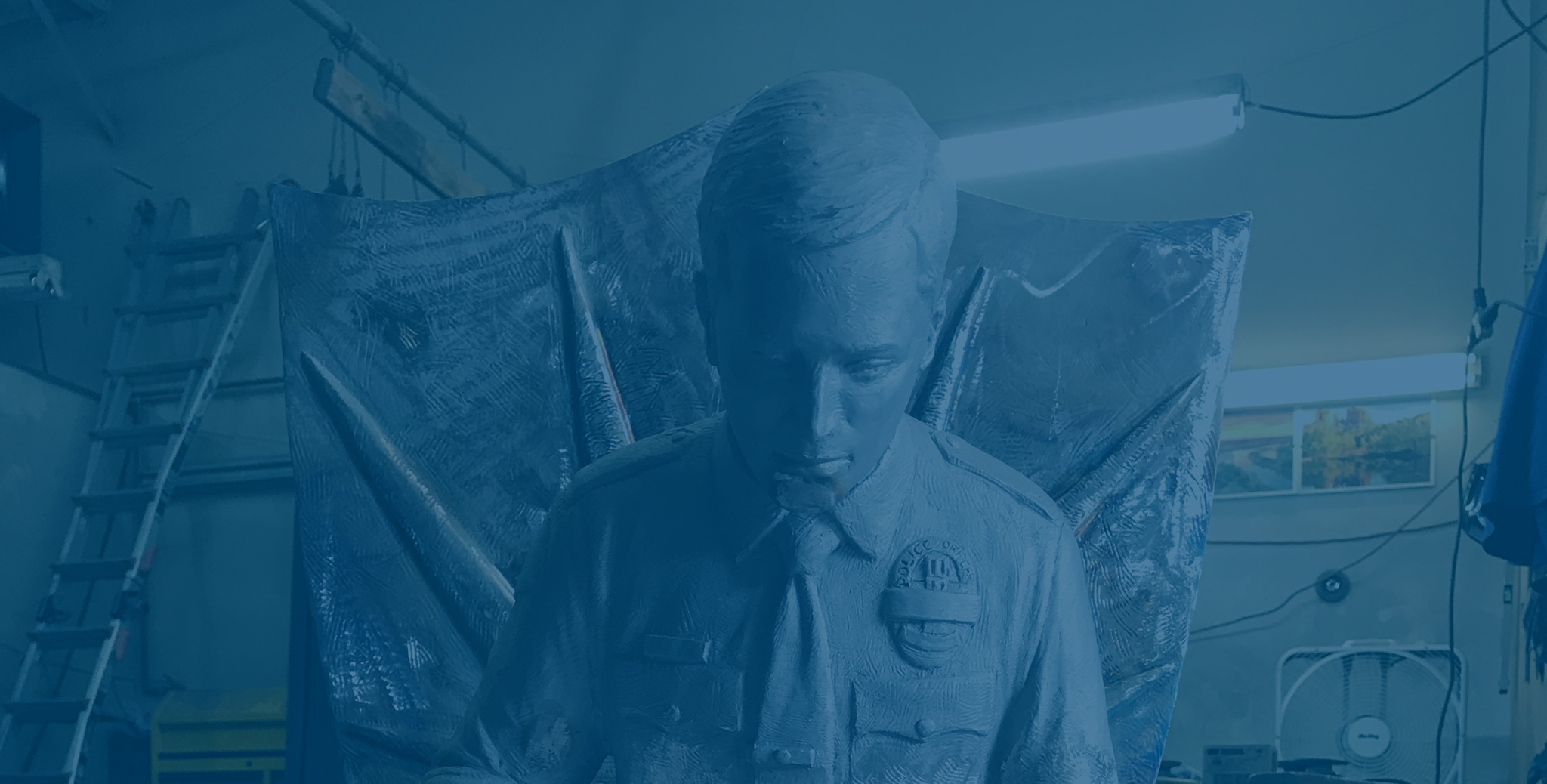
What should be decided before sculpting begins?
The strongest custom statue commissions begin with a defined purpose. Is the work a portrait, memorial, civic monument, campus landmark, religious sculpture or private piece? Who will see it, where will it stand, and what should a viewer understand when approaching it?
Those questions shape nearly every later decision. A portrait intended for close indoor viewing has different scale, surface and mounting requirements than an outdoor monument viewed across a plaza. Reference photographs, biographical information, clothing details, inscriptions, site photographs and approximate dimensions help turn a broad idea into a workable sculpture brief.
Define the story
Identify the person, event, idea or legacy the sculpture must communicate and the audience it must serve.
Design for place
Viewing distance, circulation, pedestal height, climate and surrounding architecture affect pose, scale and material choices.
Build references
Organize photographs and factual details early so likeness, clothing, objects and inscriptions can be evaluated consistently.
How a custom sculpture moves from concept to finished work
Establish scope
Purpose, site, desired scale, reference material, schedule and preferred material are reviewed before the design is developed.
Resolve pose and composition
The artist translates the brief into a three-dimensional concept. For portraits, recognizable likeness must work from multiple viewing angles not just reproduce a single photograph.
Refine through approvals
Clay or another modeling process allows form, gesture, anatomy, clothing and portrait details to be reviewed. Clear approval stages reduce ambiguity before mold making or final fabrication.
Translate the approved model
The production route depends on the selected material. A cast bronze project, for example, proceeds through mold making, wax work, casting, metal assembly and chasing.
Control the final character
Patina, coloration and surface treatment affect contrast and how sculptural details read. Finish decisions should suit both the artistic intent and intended environment.
Plan the final setting
Large or outdoor works may require coordination among fabricators, engineers, contractors, riggers and site teams. Access, anchors, foundation and installation sequence should be considered well before arrival.
Bronze is one option not the starting assumption
Material should follow the commission’s setting, visual goals, budget, scale and maintenance expectations. Bronze is widely used for permanent outdoor figurative sculpture, while bonded marble and other cast materials can suit indoor works, editions and smaller-scale pieces.
Scale is equally important. A life-size figure feels direct and human; an enlarged monument changes the relationship between subject, architecture and viewer. The right solution is the one that supports the work’s purpose and site not simply the largest available size.
Explore finished portrait sculpture in the Statues.com shop
These smaller works are not substitutes for a custom commission. They are useful examples of portrait format and cast finishes and a direct way to own sculpture while exploring a larger commissioned project.
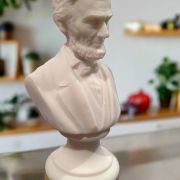
Abraham Lincoln Mini-Bust
A compact portrait bust made in white bonded marble with a hand-applied bronze-tone finish option.
View in Shop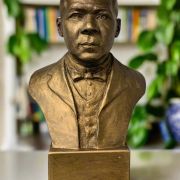
Booker T. Washington Bust
A portrait-format bonded marble sculpture with an available hand-applied bronze-tone finish.
View in Shop
Bessie Coleman Bust
A small portrait sculpture showing how recognizable historical figures can be interpreted in three dimensions.
View in ShopCustom statue commission questions
What do I need to start a custom statue commission?
Begin with the purpose of the sculpture, intended location, approximate size, desired material if known, timeline, and the best reference photographs or documentation available. A clear brief helps the sculptor recommend the next steps.
Can a portrait statue be created from photographs?
Yes, photographs can serve as key reference material. The quality, number and variety of views affect how much visual evidence the sculptor has when interpreting a person in three dimensions.
When should the installation site be considered?
Early. Viewing distance, base or pedestal, access, structural requirements, climate and surrounding architecture can influence scale, pose, material, anchoring and delivery planning.
Where can I see examples of Statues.com commissions?
Visit the Statues.com portfolio to review completed projects, then use the commissioning resources to plan your own sculpture.
Turn the idea into a workable sculpture brief
Statues.com has more than 30 years of experience developing custom sculpture projects. Share the story, reference material, intended location and approximate scale so the team can help define the next step.