
Rod Serling Statue in Binghamton, New York
A six-foot cast-bronze public monument honoring the writer, producer and creator of The Twilight Zone in the city he considered home.
A Permanent Monument to Rod Serling
The Rod Serling statue brings together portrait sculpture, television history and Binghamton’s connection to one of the twentieth century’s most influential writers.
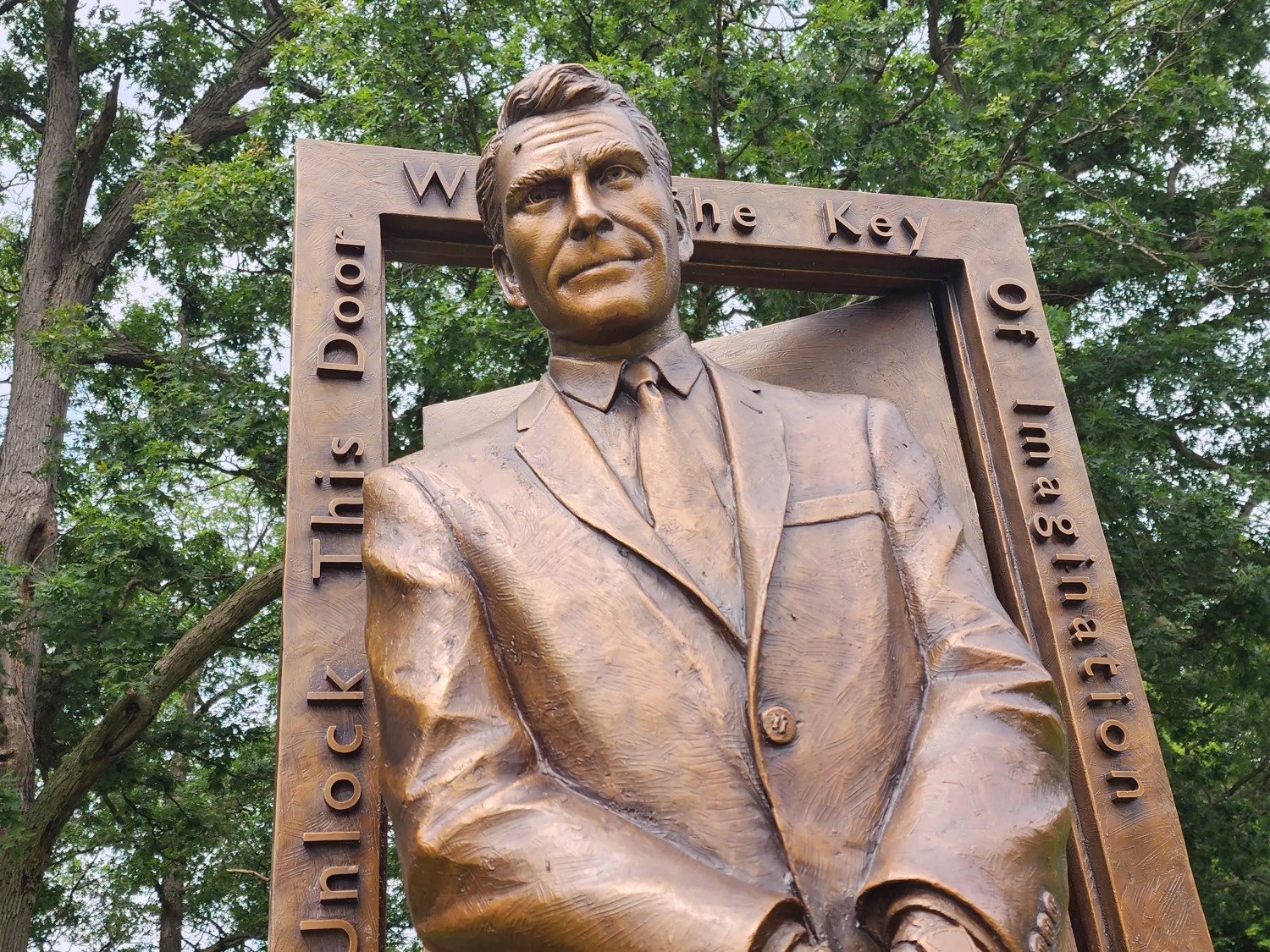
The six-foot bronze figure stands in Recreation Park on Binghamton’s West Side, near the neighborhood where Serling grew up. He is represented in the formal suit and composed narration pose familiar to viewers of The Twilight Zone, standing within a partially opened doorway that turns one of the program’s best-known images into a three-dimensional public monument.
The Rod Serling Memorial Foundation organized the project and worked closely with Statues.com during design and production. Serling’s daughter Anne visited the Salt Lake City studio, reviewed the developing likeness and participated in the approval process before bronze production.
A community-led commission transformed Rod Serling’s portrait, words and connection to Binghamton into a durable bronze landmark for Recreation Park.

How the Memorial Became a Reality
The dedication completed a four-year effort led by the Rod Serling Memorial Foundation with support from public funding, individual contributors and private donors.
Community-Led Planning
The Foundation developed the concept, coordinated stakeholders, raised funds and guided the commission toward a permanent public location.
Estimated Project Cost
Regional reporting placed the complete project at approximately $140,000, including the sculpture and related public-site work.
Centennial Dedication
The monument was unveiled during the year marking 100 years since Serling’s birth and became the centerpiece of SerlingFest.
Assemblywoman Donna Lupardo helped secure a $50,000 New York State grant. A Kickstarter campaign and individual donations contributed more than $42,000, with additional private support completing the funding. Following its dedication, the Foundation formally gifted the monument to the City of Binghamton.
Independent media coverage: Before the unveiling, 94.3 LITE FM reported on the upcoming Rod Serling statue, identifying Statues.com in Utah as its creator and highlighting Recreation Park’s connection to Serling and The Twilight Zone.
Additional independent coverage: After the unveiling, WRRV reported on the completed Rod Serling statue in Binghamton, naming Statues.com as the Utah-based creator and noting that Anne Serling visited the studio to review and approve her father’s likeness.
Why Recreation Park Is the Right Location
Rod Serling was born in Syracuse in 1924 but grew up on Binghamton’s West Side and consistently described Binghamton as his hometown. Recreation Park was part of that childhood landscape. Its carousel, paths and neighborhood setting helped shape the emotional geography that later appeared in his writing.
The connection is especially strong in the 1959 Twilight Zone episode “Walking Distance,” in which an adult returns to a remembered hometown and encounters a carousel, childhood and the limits of recovering the past. Recreation Park’s historic carousel is widely associated with that episode’s setting and symbolism.
Positioning the monument in a quieter area of the park creates space for contemplation rather than treating the sculpture as a detached celebrity object. The site connects the public artwork to lived memory, local history and the source of Serling’s creative imagination.
Designing a Recognizable Rod Serling Portrait
The design had to communicate Serling’s likeness and public persona while remaining readable as a freestanding outdoor monument.
Iconic Narration Pose
The composed stance, formal suit and folded hands refer to the calm, direct presence Serling brought to his on-screen introductions.
The Sculpted Doorway
The open door provides a recognizable narrative frame, strengthens the composition and connects the portrait directly to imagination and transition.
Family-Guided Likeness
Photographic research and review by Anne Serling helped the studio evaluate facial structure, expression and the overall character of the portrait.
From Reference Images to Finished Bronze
A six-foot portrait monument requires coordinated artistic, technical and site decisions. Likeness alone is not enough: the sculpture must also work at public viewing distances, withstand exterior exposure and arrive ready for safe installation.
Historical and Photographic Research
Reference images established Serling’s facial proportions, hair, expression, clothing and recognizable screen presence.
Composition and Scale Development
The figure, doorway, inscription and base were developed as one monument rather than as unrelated visual elements.
Full-Scale Clay Sculpting
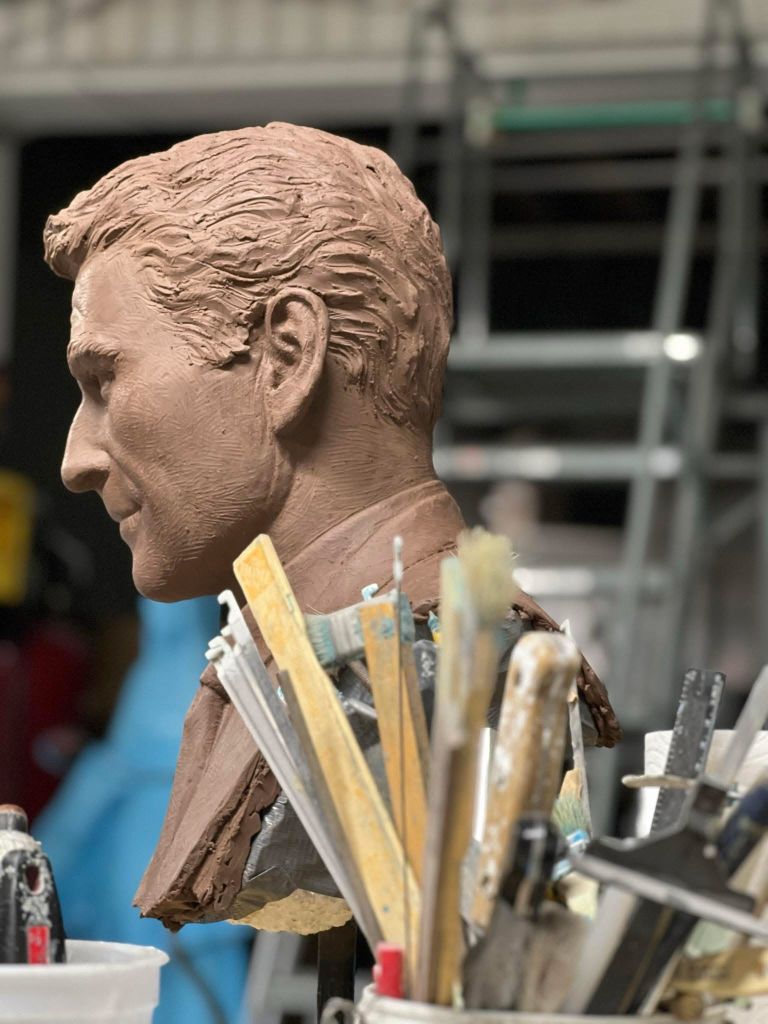
The portrait and figure were refined in clay so anatomy, surface character, gesture and likeness could be reviewed in three dimensions.
Client and Family Review
Defined approval stages allowed the Foundation and Anne Serling to evaluate the portrait before mold making and casting.
Mold Making and Bronze Casting
The approved sculpture moved through mold production, wax patterns, lost-wax casting, welding, assembly and metal chasing.
Patina, Delivery and Installation
The bronze received its final patina and protective finish before transportation, crane placement and anchoring at Recreation Park.

Rod Serling Statue Gallery
These images show the finished monument, its portrait detail and the sculptural development behind the bronze.

Why Bronze Was Selected
Bronze was appropriate because the commission was intended as a permanent outdoor civic monument. The material captures subtle portrait detail, supports the structural relationship between the figure and doorway, accepts a controlled patina and can be maintained through professional cleaning and periodic waxing.
- Fine reproduction of facial and clothing detail
- Durability for permanent exterior display
- Structural capability for a six-foot figure and doorway
- Repairable and conservable over the long term
- Traditional visual authority for civic portrait monuments
- Patina depth that remains legible in changing outdoor light
Rod Serling Statue Project Details
| Subject | Rod Serling, writer, producer and creator of The Twilight Zone |
|---|---|
| Commissioning Organization | Rod Serling Memorial Foundation |
| Sculpture Studio | Statues.com, Salt Lake City, Utah |
| Project Type | Larger-than-life public portrait monument and commemorative sculpture |
| Scale | Approximately six feet tall |
| Material | Cast bronze with exterior patina and protective finish |
| Location | Recreation Park, Binghamton, New York |
| Dedicated | September 15, 2024, during SerlingFest |
| Estimated Cost | Approximately $140,000 for the complete project |
| Ownership | Gifted by the Rod Serling Memorial Foundation to the City of Binghamton |
What This Project Demonstrates
Connect Subject and Site
The strongest location was not merely visible; it was historically and emotionally connected to Serling’s childhood and writing.
Build a Funding Coalition
State support, crowdfunding and private donations allowed the Foundation to distribute responsibility across several funding sources.
Use Structured Reviews
Family and client review helped protect portrait accuracy before irreversible mold and bronze-production stages.
Design Beyond the Figure
The doorway and inscription make the monument specific to Serling rather than creating a generic standing portrait.
Plan the Complete Site
Foundation, crane access, borders, benches, landscaping and public circulation are part of the monument—not afterthoughts.
Plan for Stewardship
A permanent bronze monument requires clear ownership, routine inspection and a documented conservation plan.
Related Statues.com Resources
Rod Serling Statue FAQ
The statue is located in Recreation Park on the West Side of Binghamton, New York, near the neighborhood where Rod Serling grew up.
The bronze figure is approximately six feet tall and is generally described as larger than life rather than strictly life-size.
The Rod Serling Memorial Foundation organized and commissioned the project. Statues.com created the sculpture with Foundation involvement and review by Serling’s daughter Anne.
The monument was dedicated and unveiled on September 15, 2024, during SerlingFest and the centennial year of Rod Serling’s birth.
The partially opened door refers to the visual language and narration of The Twilight Zone. It makes the composition specific to Serling and carries the inscription “You unlock this door with the key of imagination.”
Independent regional reporting estimated the complete project cost at approximately $140,000, supported by a $50,000 state grant, more than $42,000 in individual contributions and additional private donations.
Yes. Statues.com creates portrait sculpture from photographic and historical references. The strongest projects include several clear views, biographical context, defined review stages and input from people familiar with the subject.